Plant life · Santa Lucia Mountains
Sargent Cypress
Hesperocyparis sargentii
A California cypress whose story is closely tied to the ground beneath it.
An introduction
In the Santa Lucias
Sargent cypress is a tree of scattered California groves rather than an unbroken forest belt. Its association with serpentine and other rocky ground makes it a distinctive part of the Coast Ranges. In the Santa Lucia Mountains, it belongs to a botanical story in which geology, moisture and fire help determine where a woodland can take hold.1
01 / Natural history
Scale leaves and woody cones
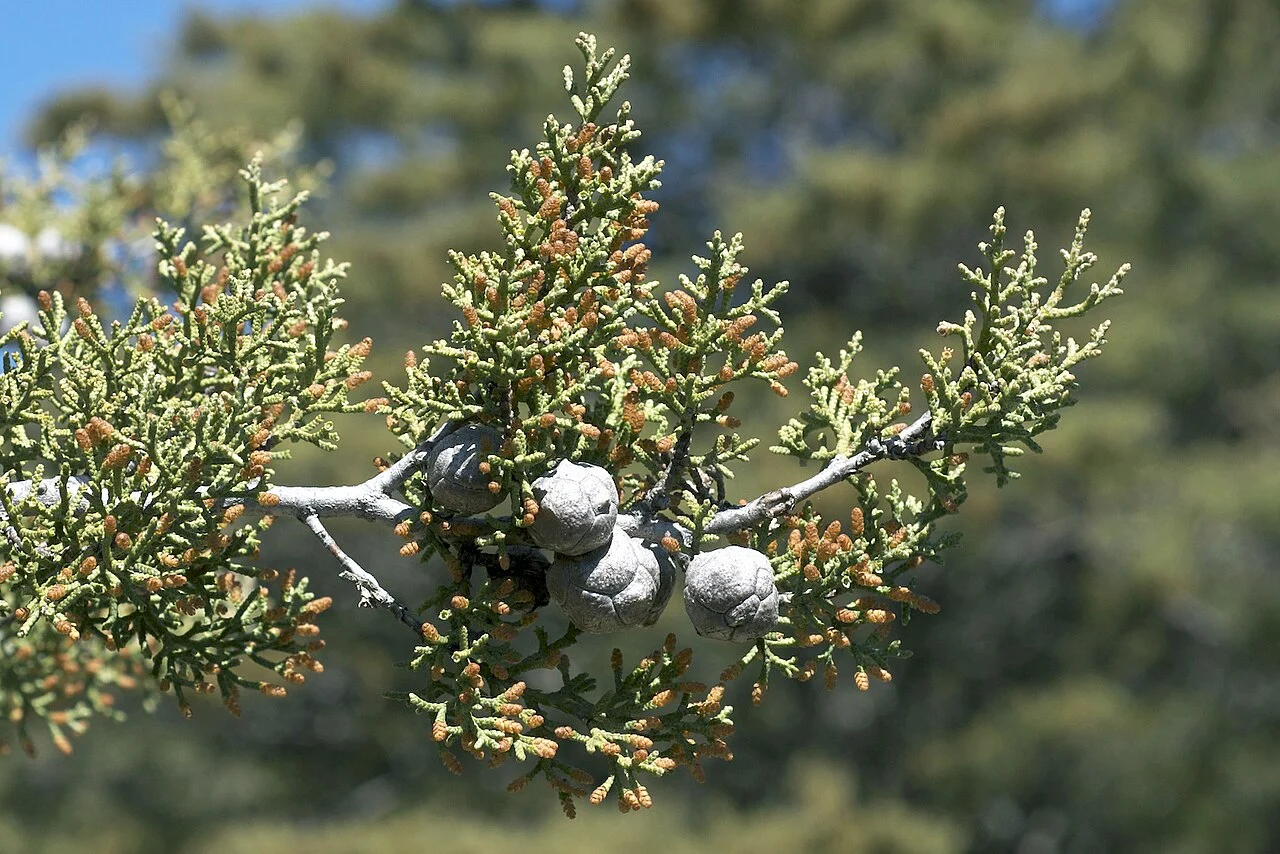
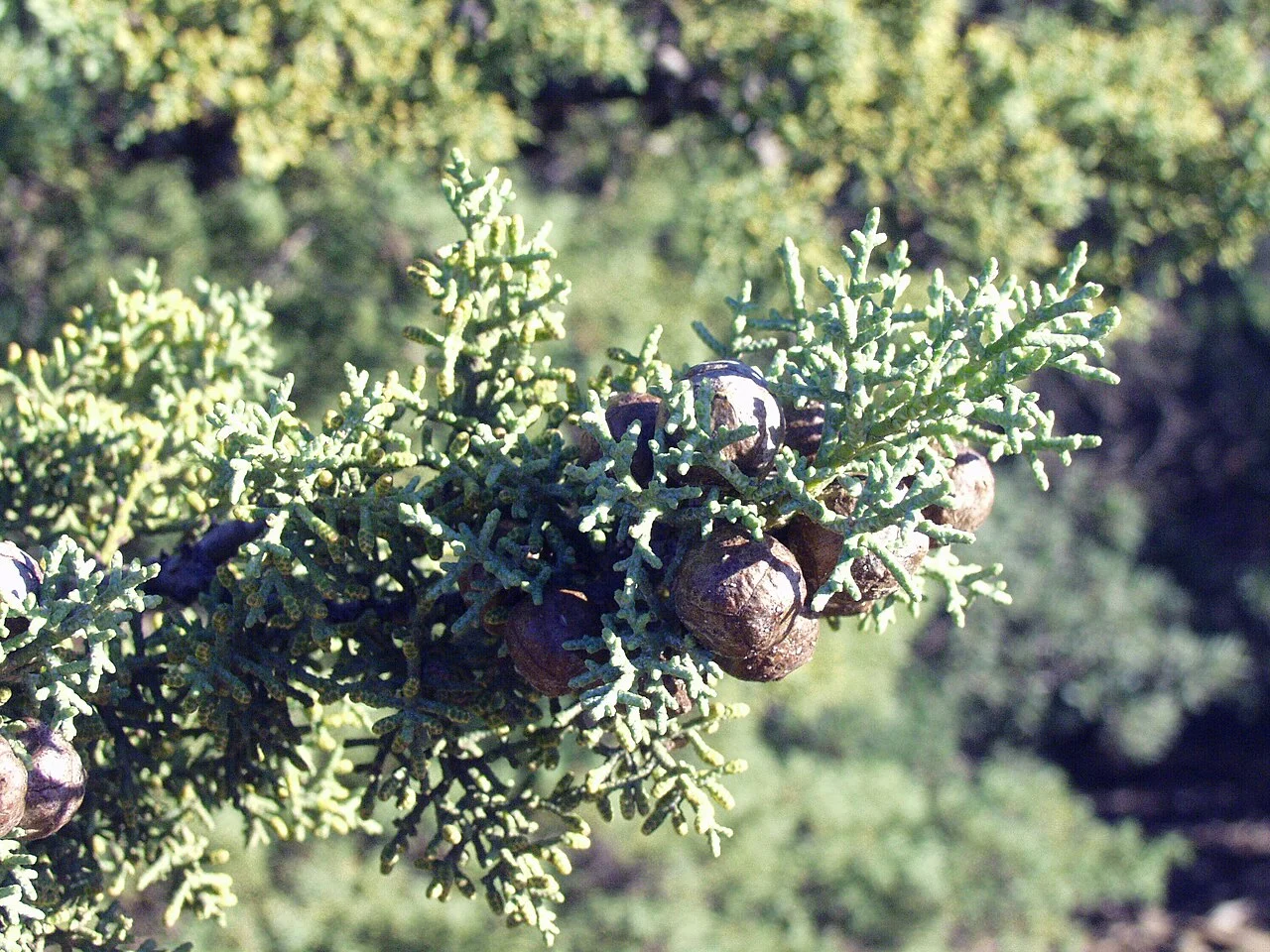
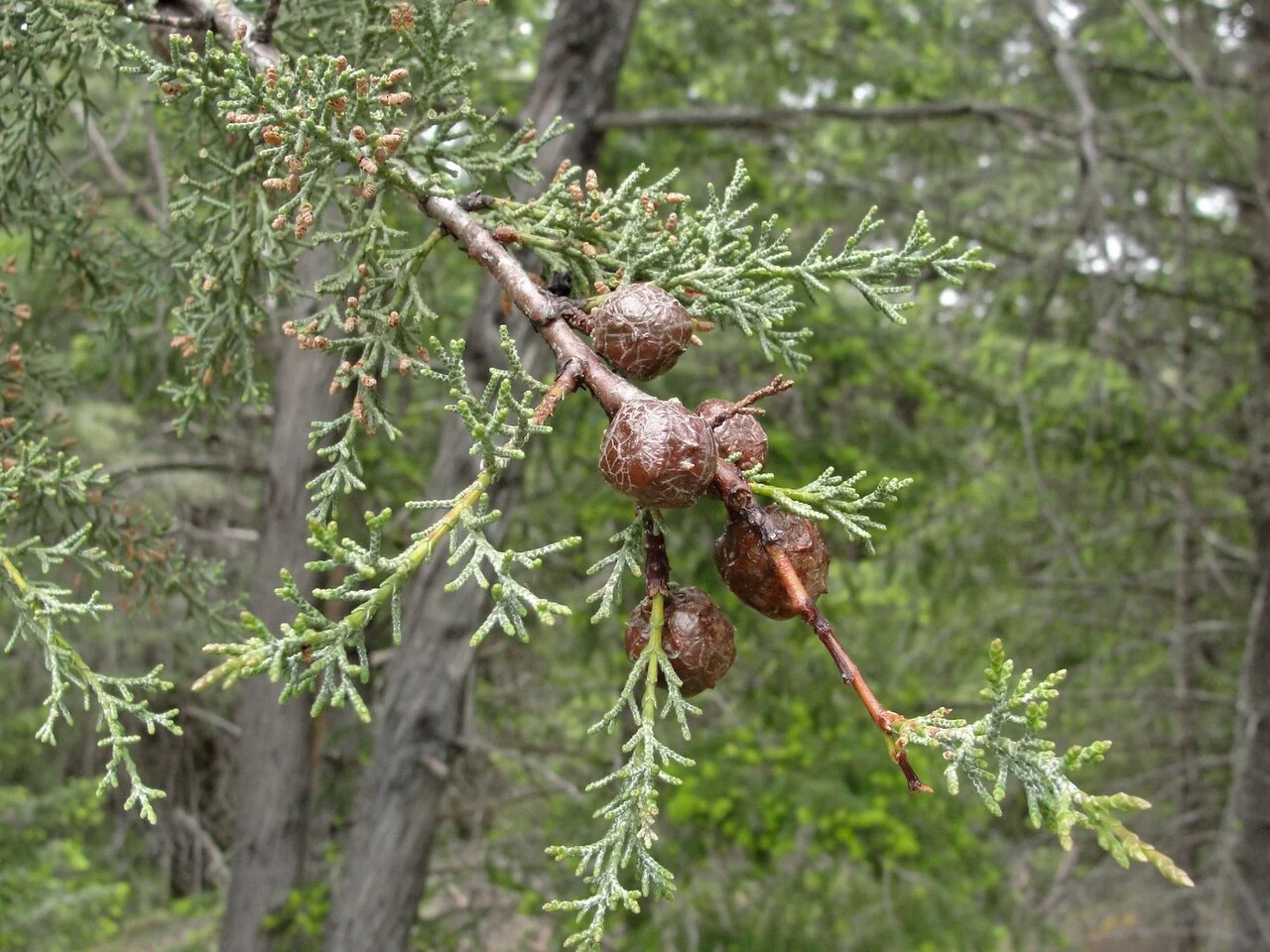
The foliage consists of small, closely fitted scale-like leaves rather than the long needles familiar on pines. Rounded woody seed cones remain on the branches, and mature bark becomes furrowed and fibrous. A tree may have an upright trunk in sheltered conditions or a lower, shrubbier form on an exposed site.1
The Forest Service describes typical mature trees as about 10–15 meters tall, with larger individuals in favorable canyons. Height alone is not an identification. Other California cypresses share several visible features, so use a botanical key when a reliable species determination is needed. Older references and the photograph titles often call this species Cupressus sargentii.1
02 / Natural history
A woodland shaped by geology
The species is native to California, with scattered populations along the Coast Ranges from Mendocino County south to Santa Barbara County. It often occupies rocky ground and serpentine-derived soils, although not every stand is on serpentine. These associations describe the species across its range, not a prediction that every similar-looking slope supports it.12
The California Native Plant Society describes two distribution centers: northern stands around the Bay Area and southern North Coast Ranges, and southern stands centered in the Santa Lucia Mountains. Its vegetation account documents Sargent cypress at Cuesta Ridge and the Lion Den Botanical Area. Those regional records are not a survey of the entire Silver Peak Wilderness. The photographs here are documented examples from Mount Tamalpais and Napa County, not photographs of local groves.12
03 / Natural history
Fire, seeds and the next generation
Sargent cypress stores seed in woody cones that can remain closed on the tree for years. Fire, or drying as cones age, can release that seed. Bare mineral soil can favor establishment. Unlike a vigorously resprouting tree, a fire-killed Sargent cypress depends on seed for the next generation.12
Calling a species fire-adapted does not mean that any fire interval is beneficial. The CNPS account emphasizes the need for time to build a viable cone crop, and the risks of repeated short-interval burning. Conservation therefore concerns the continuity of mature stands and successful regeneration as well as the survival of individual trees. Neither this ecological description nor the photographs establish the current condition of any particular grove.12
Field details
A closer look
Research record
Sources
- 1.USDA Forest Service — Hesperocyparis sargentii, Fire Effects Information System Lora L. Esser, 1994; nomenclature revised in 2013. Supports identification, California range, soil relationships and seed-based fire response.↩
- 2.California Native Plant Society — Ultramafic cypress woodland alliance Supports the two population centers, Santa Lucia regional records, cone ecology and fire-interval concerns. The account covers a combined vegetation alliance; its rarity rank is not presented here as a species listing.↩