Plant life · Santa Lucia Mountains
Santa Lucia Fir
Abies bracteata
A distinctive fir, native to one small mountain range.
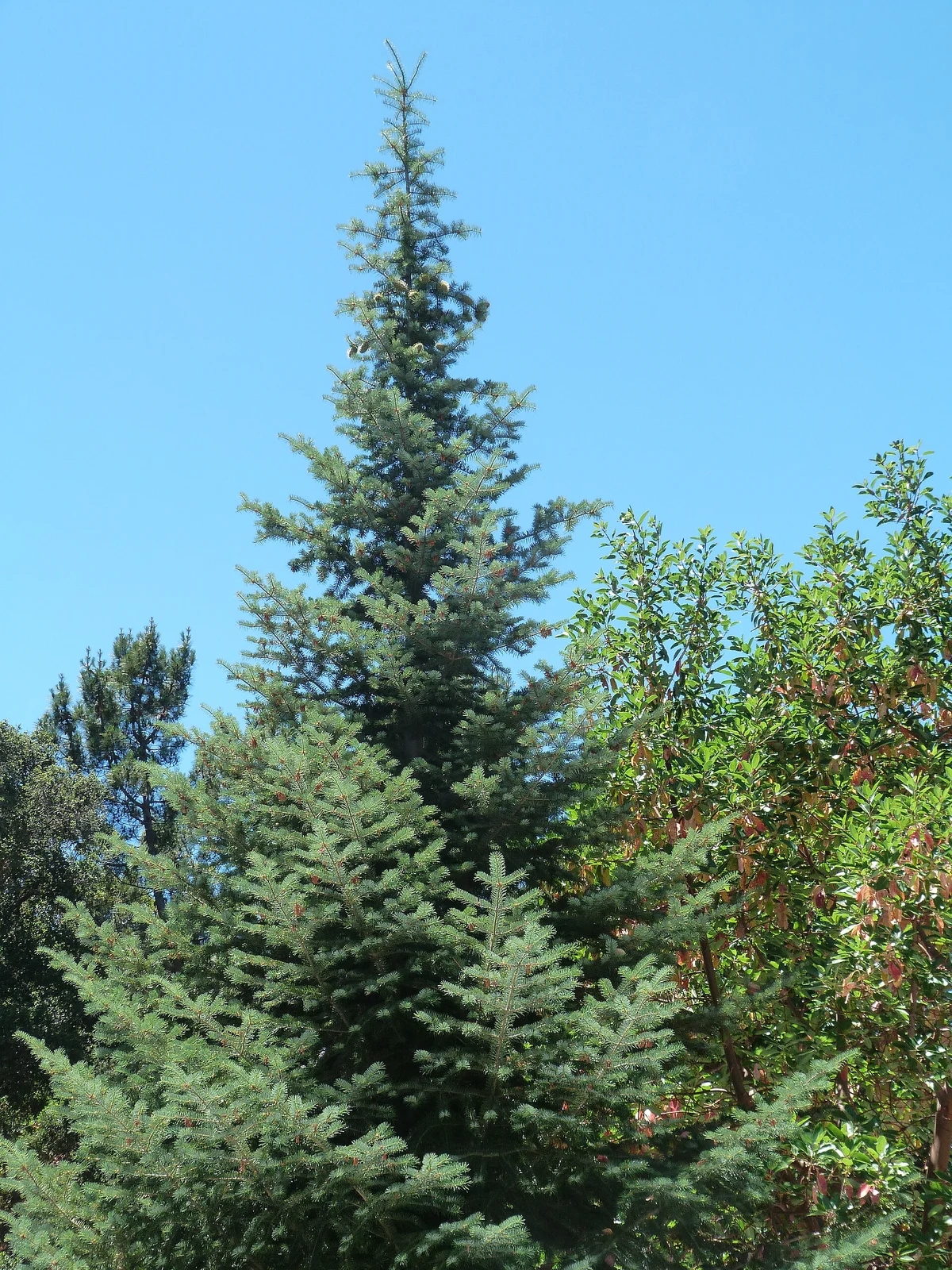
An introduction
In the Santa Lucias
Santa Lucia fir gives the mountains their name back in botanical form. Also called bristlecone fir, it is native only to the Santa Lucia Mountains of coastal California. Its narrow crowns and remarkable cones make it distinctive, but its most important characteristic may be the small, fragmented geography in which its wild populations persist.1
01 / Natural history
The bristles behind the name
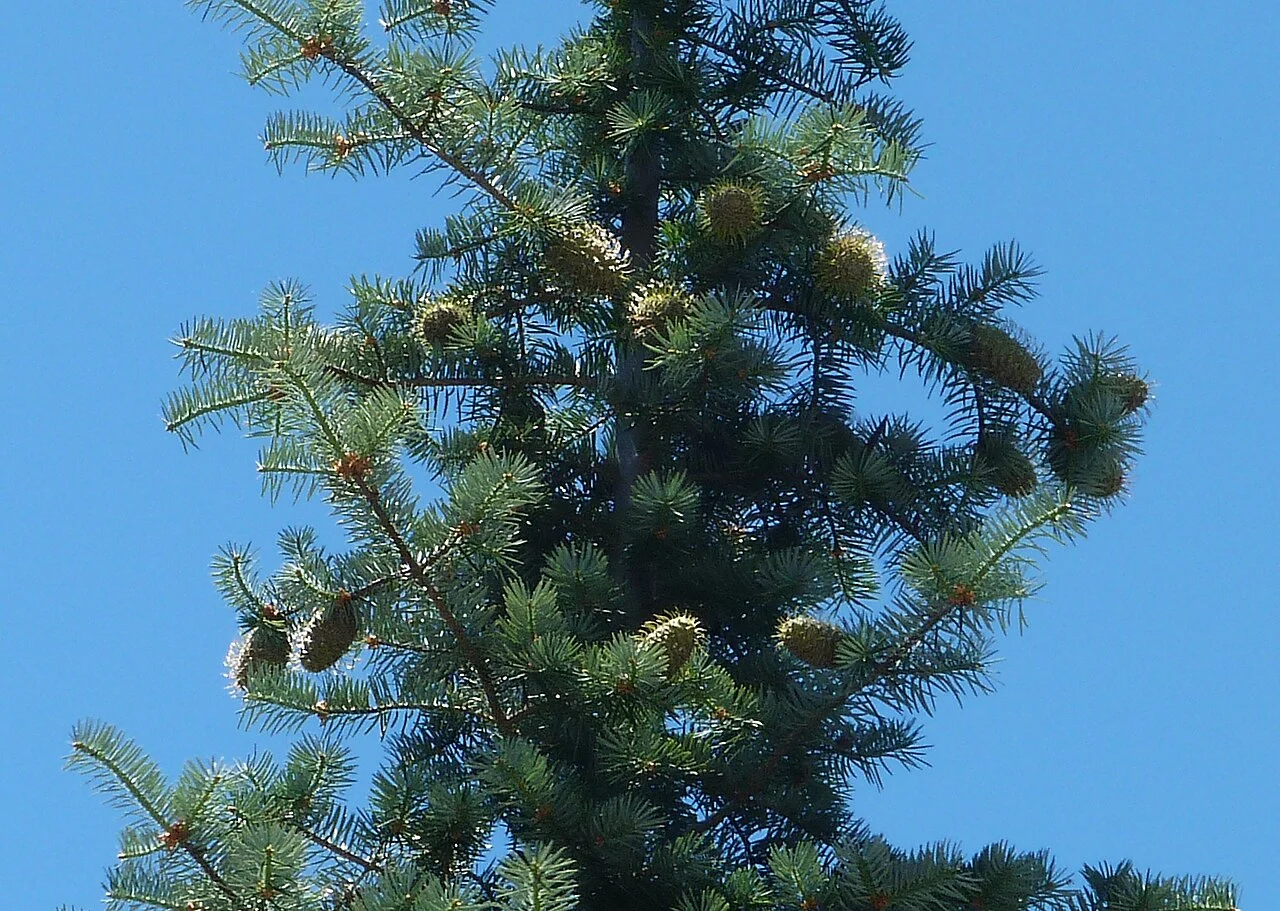
The tree often has a narrow, spire-like crown. Its needles are long and sharply pointed for a fir, and its elongated foliage buds are another useful feature. Seed cones are borne in the upper crown. Long, slender bracts project beyond the cone scales, giving rise to the name “bristlecone fir.” This is a true fir, not one of the bristlecone pines.12
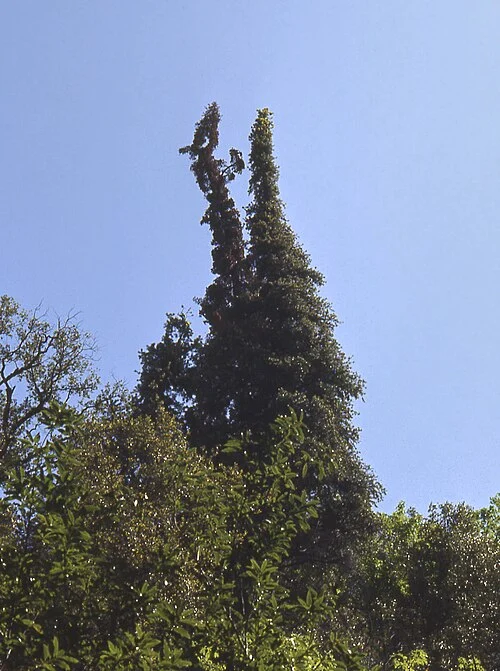
Stanford’s botanical account emphasizes the combination of spiny needle tips, spindle-shaped buds and whisker-like cone bracts. No single distant silhouette is enough for a secure identification. The photographs below show cones in the upper crown and a historical view of a tree at Cone Peak; their documented locations are in the Santa Lucia Mountains.12
02 / Natural history
A small range, many different sites
The Forest Service’s review places the native range in Monterey County and extreme northwestern San Luis Obispo County. Groves are scattered rather than continuous. The species favors a mild climate and relatively cool, moist conditions, but its sites include both sheltered canyons and steep, rocky slopes.1
Rocky terrain can limit the accumulation of fuels and offer some refuge from fire. The largest trees are not necessarily on the most exposed sites: the Forest Service describes taller individuals in deep ravines and on ocean-facing slopes. These are regional habitat relationships, not directions to a particular tree or a claim of current trail access.1
03 / Natural history
Conserving a restricted lineage
Santa Lucia fir has thin bark and does not resprout after top-kill. Its relationship with fire is therefore different from coast redwood’s. Some groves escape severe burning because of their terrain and sparse fuels, but that protection is not absolute. The Forest Service cautions that evidence on postfire recruitment remains limited.134
A 2006 genetic study found low genetic diversity and low proportions of full seed in the populations sampled. Those findings concern regeneration and conservation; they are not a current census of all wild trees. The Center for Plant Conservation documents seed collection and living-collection work by California Botanic Garden, formerly Rancho Santa Ana Botanic Garden. Such work complements, rather than replaces, protection of wild populations and their habitat.134
Field details
A closer look
Research record
Sources
- 1.USDA Forest Service — Abies bracteata, Fire Effects Information System Review of literature available through 2020. Supports native range, morphology, habitat, thin bark, lack of sprouting and limits of evidence on fire response.↩
- 2.Stanford University — Trees of Stanford & Environs: Abies bracteata Sairus Patel, 2026. Supports needle, bud and cone-bract identification. Planted specimens outside the Santa Lucias are not treated as native occurrences.↩
- 3.Ledig, Hodgskiss & Johnson — Genetic diversity and seed production in Santa Lucia fir Conservation Genetics 7 (2006), 383–398; DOI 10.1007/s10592-005-9049-x. Supports the qualified discussion of sampled populations and seed production.↩
- 4.Center for Plant Conservation — Bristlecone Fir Conservation-action records document California Botanic Garden seed and living collections. Cultivated records outside the native range and the page’s informal “endangered” wording are not used as wild-range or legal-status evidence.↩