Plant life · Santa Lucia Mountains
Coast Redwood
Sequoia sempervirens
A coastal forest, reaching its southern limits in the Santa Lucias.
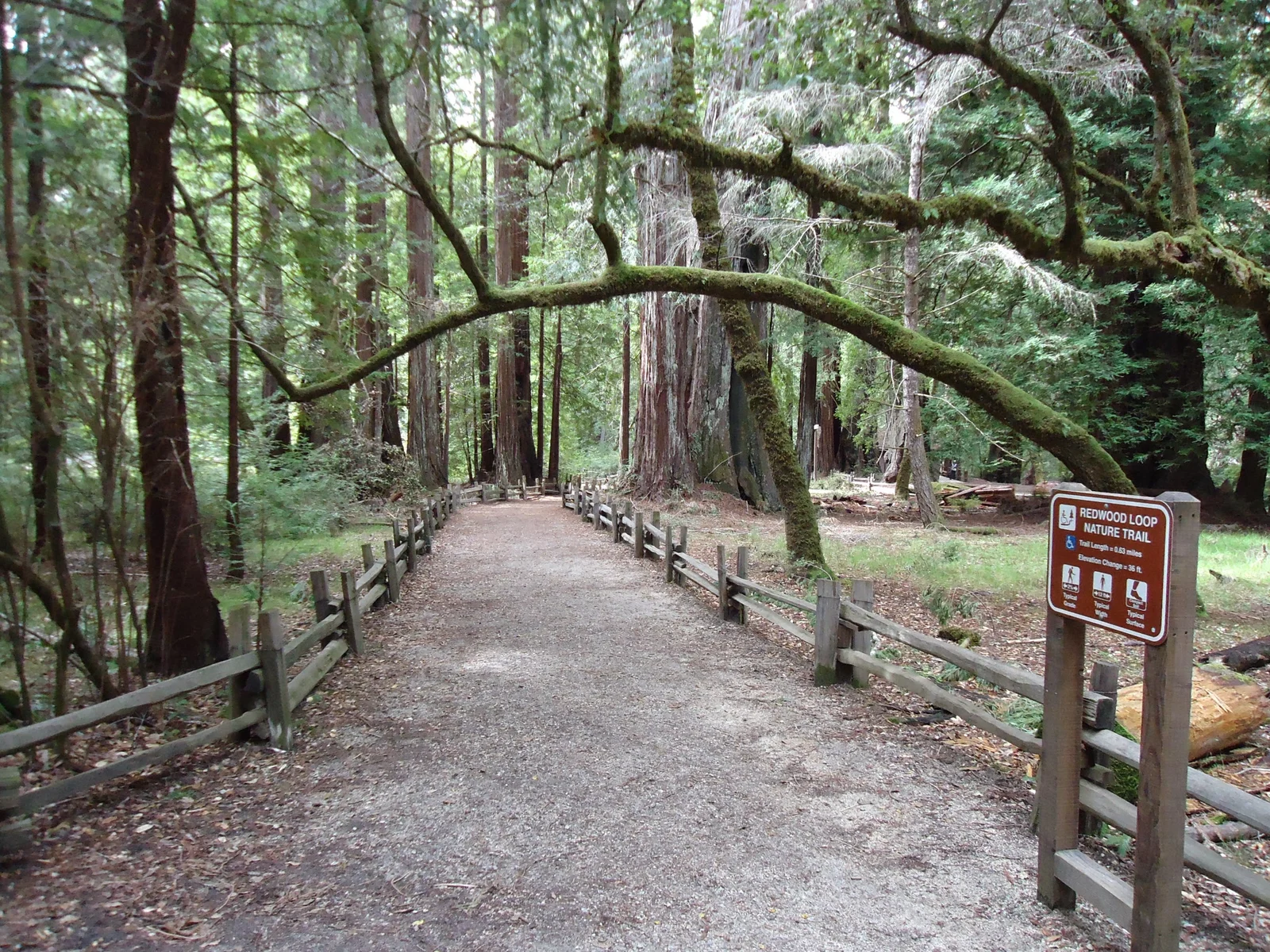
An introduction
In the Santa Lucias
The coast redwood connects the Santa Lucia Mountains to a much longer coastal story. Its native range follows the Pacific from southwestern Oregon into central California. Near the southern end of that range, sheltered canyons offer the moisture that this evergreen needs. Here, the contrast between redwood forest and dry, exposed slopes gives a particularly clear expression to the variety of the coastal mountains.1
01 / Natural history
Reading the tree
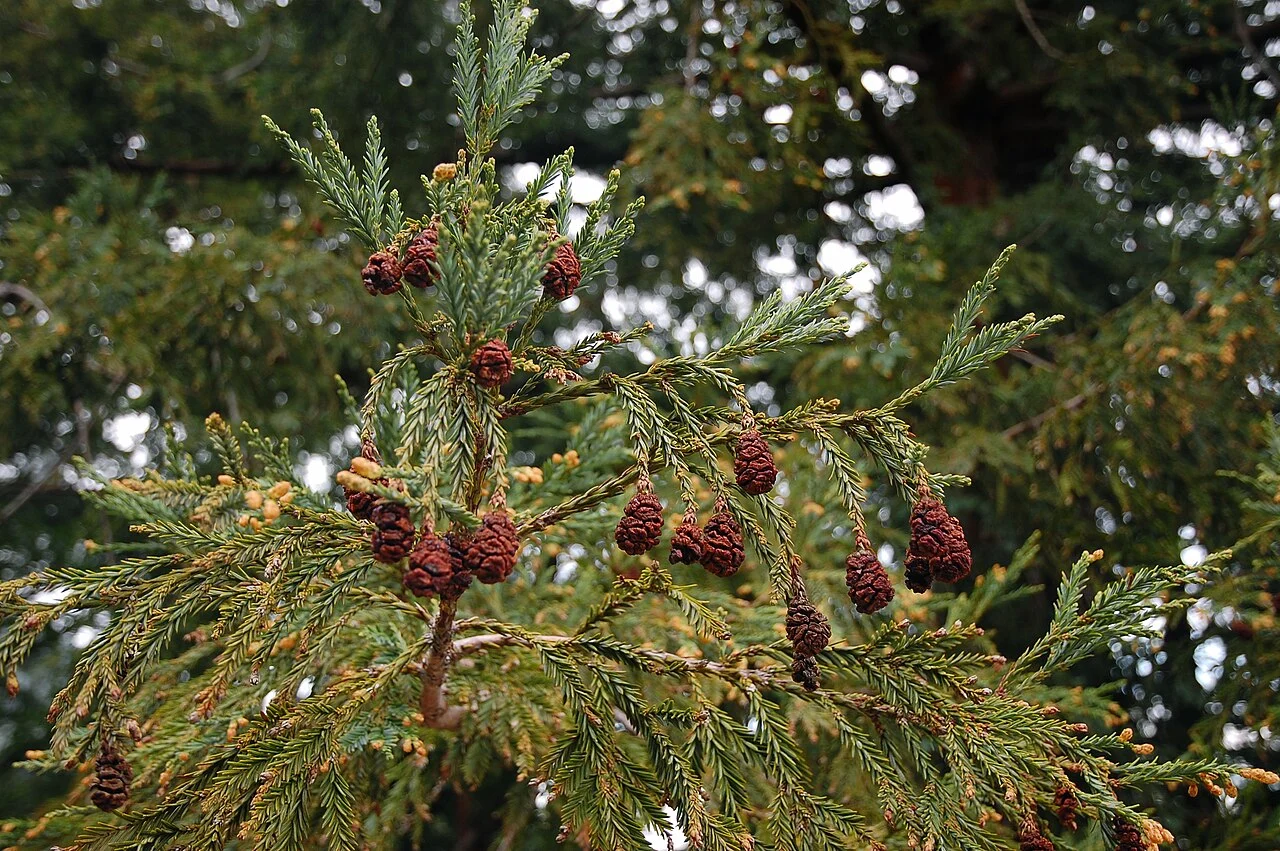
Look first for the reddish, fibrous bark and the evergreen foliage. On many shaded shoots, flattened leaves spread to either side of the twig; foliage higher in the crown can be shorter and more scale-like. The small woody seed cones are a useful reminder that even an exceptionally large tree begins with a very small seed.1
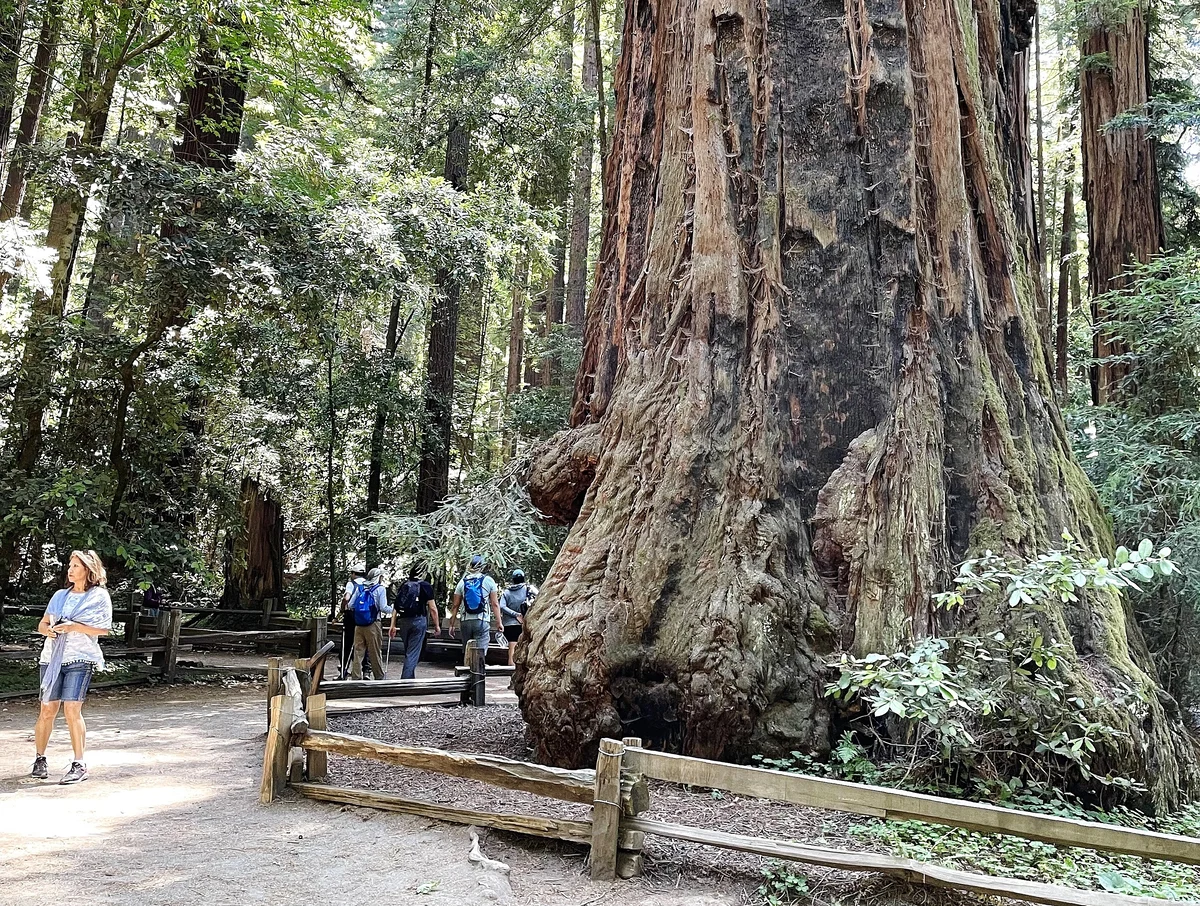
Coast redwood is not the giant sequoia of the Sierra Nevada. They are different species with different native ranges. Coast redwoods can become exceptionally tall and long-lived, but their size varies with site conditions. A sheltered valley tree and a tree on a drier hillside need not have the same proportions.1
02 / Natural history
Moisture in a summer-dry landscape
Across its native range, redwood grows in a maritime climate with rainy winters and dry summers. Coastal fog can reduce water loss and add moisture, while deep soils and sheltered terrain help sustain trees through the dry season. Stream terraces, alluvial flats and protected slopes can provide favorable conditions.1
The Forest Service’s species review identifies Salmon Creek Canyon in the Santa Lucia Mountains as the southern boundary of the natural range. This is a documented regional occurrence, not a claim that redwoods occupy every canyon or that any particular trail currently provides access. The photographs on this page illustrate the species elsewhere in California; their captions identify the locations where documented.1
03 / Natural history
Persistence, not invulnerability
Redwood can reproduce from seed and by sprouting from the root crown or stump. Thick bark and the capacity to produce new growth help explain why mature trees can survive some fires. Those adaptations do not make a redwood fireproof: young trees, severe burning and repeated injury can produce very different outcomes.1
Redwood forests provide habitat and cover for many animals. Caring for these forests also means caring for their growing conditions. The Forest Service notes sensitivity to soil compaction under heavy foot traffic. Stay on established routes, leave bark and foliage undisturbed, and treat the shaded forest floor as part of the living community rather than an empty space beneath the trees.1
Field details
A closer look
Research record
Sources
- 1.USDA Forest Service — Sequoia sempervirens, Fire Effects Information System Randy Scott Griffith, 1992. Supports native range and the Salmon Creek boundary, identification, moisture relationships, regeneration, fire response and compaction sensitivity. Historical record-height and wildlife listing statements are not used as current claims.↩